
TL;DR
- Indie Author Magazine began with 22 contributors and has grown to more than 80 writers.
- The magazine now covers far more than publishing basics, including burnout, mental health, and technology.
- Chelle Honiker approaches automation by identifying necessary tasks she dislikes and then delegating or automating them.
- Agentic AI, as Chelle describes it, moves beyond chat and can take action on a user’s behalf.
- Her core advice to authors is simple: stay curious, avoid the hype, and use tools to get back to the business of writing.
Indie Author Magazine, AI, and Letting the Bots Do the Boring
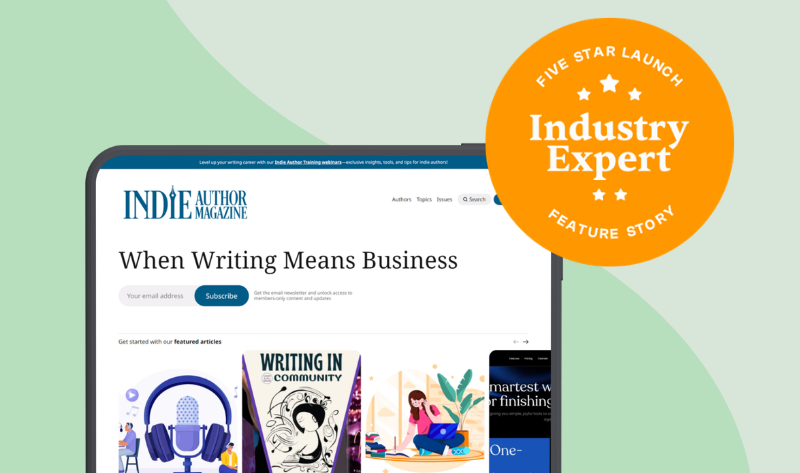
There is something fitting about a conversation on the future of indie publishing beginning with a group of authors who decided to build the resource they wanted to see. In this blog post, Celeste Barclay, Booksprout’s Head of Marketing, sat down with Chelle Honiker, Indie Author Magazine’s publisher and AI automation expert, to discuss the publication’s contributions to the industry along with the ways authors can utilize agentic AI to streamline their business processes.
How Indie Author Magazine Got Started
Indie Author Magazine started during the early pandemic, when a group of indie authors connected, shared ideas, and realized there was room for a broader, more practical publishing conversation. What began with 22 contributors has since grown into a much larger operation, one shaped by a wide range of experience and perspective. As Chelle Honiker puts it, “we’ve grown from 22 to over 80 writers, so we have different perspectives, different points of view.”
That growth has changed the scope of the magazine too. It is no longer just about the basics of publishing or business strategy. It reflects the full reality of being an author now: the demands, the pressure, the constant learning curve, and the ways the industry keeps evolving.
“We cover more of the facets of being an author than we thought we would, like in terms of burnout, in terms of mental health, in terms of technology.”
– Chelle Honiker
Why the Magazine’s Evolution Matters
That observation feels especially relevant because being an indie author today is rarely just about writing. It is also about managing a business, building systems, maintaining visibility, and protecting enough time and energy to keep creating. Chelle describes the tension well when she talks about the context switching required to move between creative work and the business side of authorship. The issue was not simply workload. It was the mental cost of constantly shifting gears.
How Automation Became the Answer
That pressure is what led her deeper into automation. Rather than trying to do everything manually, she started by identifying the tasks that were necessary but draining.
“I looked at the things that I knew were necessary, but didn’t like to do. And I knew I was either going to delegate them or automate them.”
– Chelle Honiker
That approach is practical, not flashy. It is not about chasing every new tool because it exists. It is about removing friction from the business so more attention can go to the work that actually matters. Chelle points to social media as one of the first areas that pushed her toward automation, but the principle clearly applies much more broadly.
What Chelle Means by Agentic AI
What has changed most, though, is the sophistication of the available tools. Chelle notes that her own methods have evolved significantly. Systems like Make and Zapier once handled much of her automation, but now she increasingly reaches for agentic tools instead. That shift matters because it marks the difference between software that follows a narrow sequence and software that can actively work across tasks and contexts.
For authors who are still trying to understand what “agentic AI” really means, Chelle offers a clear explanation. Early AI tools could assist, brainstorm, or respond, but they still required the user to move the output into action. Agentic AI changes that dynamic.
“It can now take action on your behalf, so it’s gone from being a junior chatting partner to the most proficient assistant you will ever have.”
– Chelle Honiker
That is the leap many authors are only beginning to grasp. The tool is no longer just helping you think. It is helping you do.
Addressing the Fear Around Access and Control
Of course, the moment AI starts doing more, authors start asking an entirely reasonable question: how much access does it need? Chelle’s answer is one of the most reassuring parts of the conversation. These systems do not have to operate with unlimited reach. They can work within the environment and permissions the user sets.
“It only has access to the things that you’ve given it on your own desktop.”
– Chelle Honiker
She expands on that idea even further: “You create the parameters, and you create the guardrails, and you decide all of the permissions and limitations.” For authors nervous about privacy, logins, or handing over too much control, that framing is important. Automation does not have to mean exposure. It can mean structure.
What These Tools Can Actually Do
The boldest part of the interview came when Celeste asked Chelle what she wants agentic tools to do that they still cannot. Her answer is immediate.
“Nothing. And that’s not hyperbole. It’s nothing. It manages my entire business end to end.”
– Chelle Honiker
Whether every author wants that level of adoption is a separate question, but the implication is clear: these tools are far more capable than many people assume.
That becomes even easier to understand when Chelle connects abstract possibility to real-world use. Asked about her favorite automation, she offers the kind of answer that gets a laugh because it is so relatable: “Anything I don’t have to do now is my favorite thing.” Then she gets specific. One of the biggest wins has been websites—the kind of task that often sounds simple but has a way of swallowing time. Chelle describes giving a quick instruction through Telegram to add three items to her homepage and watching the system handle the update more quickly and elegantly than if she had logged in and done it manually herself.
Why Websites and SEO Matter So Much
That kind of example lands because indie authors know the trap. A “quick update” becomes an hour. A website tweak becomes a detour. A technical task breaks concentration and steals momentum from more important work. Chelle argues that these newer tools can do more than handle edits, too. Given a framework and inspiration, they can help build websites, find or create imagery, and handle backend optimization that many authors simply do not have the time to learn deeply themselves.
One of her most compelling points is that AI can also help with the invisible technical layers authors often overlook.
“It can do all of the technical things on the back end to be sure that it’s prepared for SEO, prepared for LLM integration.”
– Chelle Honiker
That matters. Visibility is no longer just about having a website. It is about having one that search engines can understand, index, and surface. It is about structure as much as style. Chelle adds that these tools can even support content creation in a way that stays aligned with the creator’s tone, noting that it “can write blog posts in your exact voice.”
Chelle’s Advice for Authors Exploring AI
Still, one of the strongest aspects of Chelle’s perspective is that it is enthusiastic without being breathless. She is not suggesting authors hand over everything overnight or chase hype for hype’s sake. In fact, her advice is the opposite.
“Be curious, keep looking at them, pay attention to what’s happening. Don’t go all in on the hype.”
– Chelle Honiker
That balance feels very much in line with what Indie Author Magazine has become. It is not simply a place to celebrate trends. It is a place to help authors understand what matters, what is changing, and what might actually be useful in a working author business. With five years of archived articles, Chelle suggests the magazine’s search function as a starting point for questions about AI, copyright, legality, and publishing practices, because there is often already a thoughtful piece pointing readers in the right direction.
The Real Takeaway
In the end, the conversation is not really about replacing creativity. It is about protecting it.
For indie authors, time is always under pressure. Energy is finite. Focus is fragile. Every repetitive task chips away at the work only the author can do. Good automation does not replace the writer. It gives the writer more room to be one.
And Chelle sums it up in a line that feels tailor-made for the moment:
“Let the bots do the boring, and you do the brilliant.”

Leave a Reply